Showing posts with label government and politics. Show all posts

Wednesday, March 14, 2007

comics 3 - the wonder of it all

so captain america is dead! this is one that the new boy, who's not into comics at all, actually heard about before i did. maybe because it made headline news on cnn last week?? hell, even the uber-legitimate wall street journal ran a cool opinion piece on it.


to be honest, i can't tell if this is big news or not. as the article itself even notes,

There is an old joke about death in the comic-book world: No one stays dead except Bucky, Jason Todd and Uncle Ben.
and right the author is - bad guys in comic book movies are notorious for saying things like, "don't you ever die?!", simply because, well, if the heroes do, there's no story.

i had never read anything involving captain america until a friend of mine lent me the new ultimates, which features the cap as a character, but his death and this wsj article make a nice segue into my ongoing series on what i love about graphic novels (parts one and two here). i know there's a political point to this stunt, of course there is. blah blah, george bush, rape of the meaning of the term "democracy," blah. i'm not in the mood for those political implications tonight. here's what i see from it.

the wonder of it all

[I]t's worth pausing to appreciate that even at this late date, Captain America's death still meant something. Partially, this was due to the simple fact that Marvel was able to keep his murder a surprise--something of a wonder in an age when every other happening comes prehyped and presold. (Mr. Quesada reveals that the editors went to great lengths to keep the secret, engaging in a quiet campaign of disinformation and even going so far as to leak fake covers to throw fans off the scent.)

Ultimately, it is wonder that we need most from comic books. The wonder that a man can fly or that a skinny American kid with a stout heart can pick up a shield and deck the Führer. With his death last week, Captain America gave us that sense of wonder once more.

so much of growing up involves being too in the know - the old "now that i know how movies are made, i don't enjoy them anymore" attitude. i feel like we need to sit back and be awed every once in a while! not just 'isn't it cool that marvel kept it a secret' but - isn't it cool that they killed off captain america?! it's freaking awesome. isn't it cool that there are news articles and scholarly debate about what a comic book's message and purpose is? :] i think it is.

Thursday, March 08, 2007

maybe brokeback helped :) - article

in an ongoing effort to make the blog more readable, this post has been revamped. :) thanks to the loyal readership for sticking with me.

--------

thanks to marcos for this article. maybe there is some hope for the republican party yet.

Zwonitzer said he never sought to be a "Republican hero" for gay rights.

"But maybe for human rights," he said.

the other great note from the article is Zwoniter's recognition that this is truly THE civil rights fight of our generation. i'm glad it's crossing party lines.

equality shouldn't have to be bestowed. if i can date someone who's not my own race, then the guy next door should be able to date whomever he pleases.

Monday, February 19, 2007

live and let love. please.

i was doing research for a paper that i'm writing and came across this really eloquent piece. i'm not sure if it's reproduced entirely accurately, but i'll keep looking for its original. from what i understand, this was a letter written in 2000 by Sharon Underwood, from a small town in vermont, printed in her local paper.

------------

As the mother of a gay son, I've seen firsthand how cruel and misguided people can be.

Many letters have been sent to the Valley News concerning the homosexual menace in Vermont. I am the mother of a gay son and I've taken enough from you good people.

I'm tired of your foolish rhetoric about the "homosexual agenda" and your allegations that accepting homosexuality is the same thing as advocating sex with children. You are cruel and ignorant. You have been robbing me of the joys of motherhood ever since my children were tiny.

My firstborn son started suffering at the hands of the moral little thugs from your moral, upright families from the time he was in the first grade. He was physically and verbally abused from first grade straight through high school because he was perceived to be gay. He never professed to be gay or had any association with anything gay, but he had the misfortune not to walk or have gestures like the other boys. He was called "fag" incessantly, starting when he was 6.

In high school, while your children were doing what kids that age should be doing, mine labored over a suicide note, drafting and redrafting it to be sure his family knew how much he loved them. My sobbing 17-year-old tore the heart out of me as he choked out that he just couldn't bear to continue living any longer, that he didn't want to be gay and that he couldn't face a life without dignity.

You have the audacity to talk about protecting families and children from the homosexual menace, while you yourselves tear apart families and drive children to despair. I don't know why my son is gay, but I do know that God didn't put him, and millions like him, on this Earth to give you someone to abuse.

...If you want to tout your own morality, you'd best come up with something more substantive than your heterosexuality. You did nothing to earn it; it was given to you. If you disagree, I would be interested in hearing your story, because my own heterosexuality was a blessing I received with no effort whatsoever on my part. It is so woven into the very soul of me that nothing could ever change it. For those of you who reduce sexual orientation to a simple choice, a character issue, a bad habit or something that can be changed by a 10-step program, I'm puzzled. Are you saying that your own sexual orientation is nothing more than something you have chosen, that you could change it at will? If that's not the case, then why would you suggest that someone else can?

A popular theme in your letters is that Vermont has been infiltrated by outsiders. Both sides of my family have lived in Vermont for generations. I am heart and soul a Vermonter, so I'll thank you to stop saying that you are speaking for "true Vermonters."

You invoke the memory of the brave people who have fought on the battlefield for this great country, saying that they didn't give their lives so that the "homosexual agenda" could tear down the principles they died defending. My 83-year-old father fought in some of the most horrific battles of World War II, was wounded and awarded the Purple Heart.

He shakes his head in sadness at the life his grandson has had to live. He says he fought alongside homosexuals in those battles, that they did their part and bothered no one. One of his best friends in the service was gay, and he never knew it until the end, and when he did find out, it mattered not at all. That wasn't the measure of the man.

You religious folk just can't bear the thought that as my son emerges from the hell that was his childhood he might like to find a lifelong companion and have a measure of happiness. It offends your sensibilities that he should request the right to visit that companion in the hospital, to make medical decisions for him or to benefit from tax laws governing inheritance. How dare he? you say. These outrageous requests would threaten the very existence of your family, would undermine the sanctity of marriage.

You use religion to abdicate your responsibility to be thinking human beings. There are vast numbers of religious people who find your attitudes repugnant. God is not for the privileged majority, and God knows my son has committed no sin. The deep-thinking author of a letter to the April 12 Valley News who lectures about homosexual sin and tells us about "those of us who have been blessed with the benefits of a religious upbringing" asks: "What ever happened to the idea of striving . . . to be better human beings than we are?"

Indeed, sir, what ever happened to that?

------------

i want to be able to write like this. simple, clear, from the heart.

she makes so many good points that we don't think about everyday - that 90% of the population does NOTHING to earn the heterosexuality that is given to them; that if "switching" from gay to straight were possible, so too would be its inverse; and, of course, reminding us that hatred hurts not just the victim, but also his family and those who love him as he suffers.

it's 2007, people. aren't we done with this?

Monday, January 01, 2007

happy new year, my dears

a haunting, must-read article from a NYT editor whose husband was killed in iraq. knowing he might not live to see his infant son grow up, he left a sprawling notebook filled with all the fatherly wisdom he wanted to pass on.

it's so sad.

happy 2007, all - may the new year bring new experiences and new happinesses for us. i think we deserve it.

Thursday, November 02, 2006

jesus fucking christ... - article

i...i can't even imagine.


------------
November 2, 2006
Tending a Fallen Marine, With Skill, Prayer and Fury
By C. J. CHIVERS

KARMA, Iraq, Oct. 30 — Petty Officer Third Class Dustin E. Kirby clutched the injured marine’s empty helmet. His hands were coated in blood. Sweat ran down his face, which he was trying to keep straight but kept twisting into a snarl.

He held up the helmet and flipped it, exposing the inside. It was lined with blood and splinters of bone.

“The round hit him,” he said, pausing to point at a tiny hole that aligned roughly with a man’s temple. “Right here.”

Petty Officer Kirby, 22, is a Navy corpsman, the trauma medic assigned to Second Mobile Assault Platoon of Weapons Company, Second Battalion, Eighth Marines. Everyone calls him Doc. He had just finished treating a marine who had been shot by an Iraqi sniper.

“It was 7.62 millimeter,” he continued. “Armor piercing.”

He reached into his pocket and retrieved the bullet, which he had found. “The impact with the Kevlar stopped most of it,” he said. “But it tore through, hit his head, went through and came out.”

He put the bullet in his breast pocket, to give to an intelligence team later. Sweat kept rolling off his face, mixed with tears. His voice was almost cracking, but he managed to control it and keep it deep. “When I got there, there wasn’t much I could do,” he said.

Then he nodded. He seemed to be talking to himself. “I kept him breathing,” he said.

He looked at Lance Cpl. Matias Tafoya, his driver, and raised his voice. It was almost a shout. “When I told you that I do not let people die on me, I meant it,” he said. “I meant it.”

He scanned the Iraqi houses, perhaps 150 yards away, on the other side of a fetid green canal. Marines were all around, pressed to the ground, peering from behind machine-gun turrets or bracing against their armored vehicles, aiming rifles at where they thought the sniper was.

The sniper had made a single shot just as the marines were leaving a rural settlement on the western edge of Karma, a city near Falluja in Anbar Province.

The marines had been searching several houses on this side of the canal, where they found five Kalashnikov assault rifles and bomb components, and were getting back into their vehicles when everyone heard the shot. It was a single loud crack.

No one was precisely sure where it had come from. Everyone knew precisely where it hit. It struck a marine who was peering out of the first vehicle’s gun turret. He collapsed.

Petty Officer Kirby rushed to him and found him breathing. He bandaged the marine’s head as the vehicle lurched away. Soon he helped load the wounded marine into a helicopter, which touched down beside the convoy within 12 minutes of the shot.

Once the helicopter lifted away, he ran back to his vehicle, ready to treat anyone else. He was thinking about the marine he had already treated.

“If I had gone with him,” he said, and glanced to where the helicopter had flown away, over the line of date palms at the end of a field. His voice softened. “But I’m not with him,” he said.

He turned, faced a reporter and spoke loudly again. “In situations and times like this, I am bound to start yelling and shouting furiously,” he said. “Don’t think I am losing my mind.”

He held his bloody hands before his face, to examine them. They were shaking. He made fists so tight his veins bulged. His forearms started to bounce.

“His name was Lance Cpl. Colin Smith,” he said. “He said a prayer today right before we came out, too.”

“Every time before we go out, we say a prayer,” he said. “It is a prayer for serenity. It says a lot about things that do pertain to us in this kind of environment.”

The only sounds were Doc’s voice and the vehicle’s engine thrumming.

He recited the prayer. There was a few moments of silence. “It’s a platoon kind of thing, if you know what I mean,” he said.

He listened to his radio headset and looked at Lance Corporal Tafoya, relaying word of the marines’ movements. “Right now the grunts are performing a hard hit on a house,” he said. He turned back to the subject of Lance Corporal Smith, 19.

“The best news I can throw at anybody right now, and that I am throwing to myself as often as I can, is that his eyes were O.K.,” he said. “They were both responsive. And he was breathing. And he had a pulse.”

He listened to his radio. “Two houses they’ve hit so far have both been swept and cleared.”

He looked at the reporter beside him. “Do you pray?” he asked. “Do that. I’d appreciate it.”

After a few minutes he started talking again. “You see, having a good platoon, one that you know real well, it’s both a gift and a curse. And Smith? Smith has been with me since I was...”

He stopped. “He was my roommate before we left,” he said.

He refilled his lungs and raised his voice. “His dad was his best friend,” he said. “He’s got the cutest little blond girlfriend, and she freaks out every time we call because she’s so happy to hear from him.”

He sat quietly again. A few minutes passed. “The first casualty we had here — his name was James Hirlston — he was his good friend.”

“Hirlston got shot in the head, too,” he said.

He said something about Iraqi snipers that could not be printed here.

Then he was back to the subject of Lance Corporal Smith.

“I really thank God that he was breathing when I got to him, because it means that I can do something with him,” he said. “It helps. People ask you, ‘What are you doing? What are you doing?’ It helps, because if he’s breathing, you’re doing something.”

There had been many Iraqi civilians outside a few minutes before the sniper made his shot. Most of them had disappeared. Now an Iraqi woman walked calmly between the sniper and the marines, as if nothing had happened.

She passed down the street.

Petty Officer Kirby began to list the schools he had attended to be ready for this moment. Some he had paid for himself, he said, to be extra-prepared.

In one course, an advanced trauma treatment program he had taken before deploying, he said, the instructors gave each corpsman an anesthetized pig.

“The idea is to work with live tissue,” he said. “You get a pig and you keep it alive. And every time I did something to help him, they would wound him again. So you see what shock does, and what happens when more wounds are received by a wounded creature.”

“My pig?” he said. “They shot him twice in the face with a 9-millimeter pistol, and then six times with an AK-47 and then twice with a 12-gauge shotgun. And then he was set on fire.”

“I kept him alive for 15 hours,” he said. “That was my pig.”

“That was my pig,” he said.

He paused. “Smith is my friend.”

He looked at his bloody hands. “You got some water?” he said. “I want some water. I just want to wash my wedding band.”

He listened to the tactical radio. The platoon was sweeping houses but could not find the sniper.

The company started to move. It stopped at another house. The marines were questioning five Iraqi men. Doc watched from the road, waiting for the next call.

“I would like to say that I am a good man,” he said. “But seeing this now, what happened to Smith, I want to hurt people. You know what I mean?”

The marines had not fired a shot.

They took one of the men into custody, mounted their vehicles and drove back to Outpost Omar, their company base, passing knots of Iraqi civilians on the way. The civilians looked at them coldly.

Inside the wire, First Lt. Scott R. Burlison, the company commander, gathered the group and told them that Lance Corporal Smith was alive and in surgery. He was critical, but stable. They hoped to fly him to Germany.

Doc had scrubbed himself clean. A big marine stepped forward with a small Bible, and the platoon huddled. He began with Psalm 91, verses 5 and 11.

“Thou shall not be afraid for the terror by night, nor for the arrow that flieth by day,” said the big marine, Lance Cpl. Daniel B. Nicholson. “For he shall give his angels charge over thee, to keep thee in all thy ways.”

Then he asked for the Lord to look after Lance Corporal Smith and whatever was ahead, and to take care of everyone who was still in the platoon.

“Help us Lord,” he said. “We need your help. It’s the only way we’re going to get through this.”

Doc stood in the corner, his arm looped over a marine. “Amen,” he said. There were some hugs, and then the marines and their Doc went back to their bunks and their guns.

-----------
original article here, and here is a slideshow and oral report by the author of the article.

Wednesday, October 25, 2006

the theatrics of government - article

this slate author dares to say that if, given the choice, democrats wouldn't take back the page scandal to spare the boys. brave stance.

-----------------

Folier Than Thou
The po-faced contest between Republicans and Democrats.
By Michael Kinsley
Posted Friday, Oct. 20, 2006, at 6:49 AM ET


Here in Washington, we're all competing to see who can be more po-faced about Mark Foley and the congressional pages. Who can deplore Foley's behavior the most? Democrats, sensing a deeply wounded Republican Party, are going in for the kill. It's the final evidence that the GOP is terminally corrupt: A congressman was cyber-molesting teenage boys, and his party leaders evidently didn't even care. Republicans answer: Hey, we invented child molesting! As an issue, that is. We own family values, and we're not about to let the party of Monica Lewinsky and Heather Has Two Mommies outflank us on the sexual morality front. And then there are gay voices, eager to remind people that being gay and molesting children are two different things, which, of course, they are. But just to make the point clear, gays want everyone to know that they defer to no one in their distaste for Foley's behavior.

So, everyone claims to be terribly distressed. We glare at each other, looking as grim as possible, and the first one to break into a grin or a smirk or a snort loses. Stop it! It's not funny! But then, who are all the people watching Letterman and Leno, Stewart and Colbert, and laughing—laughing!—at Mark Foley's shenanigans? Who are the people cracking jokes on the Internet? They are so distressed that they can't stop giggling, and they find the whole subject so distasteful that they can't get enough of it. This is not a traditional case of politicians' hypocrisy. This is politicians accommodating the hypocrisy of voters.

Perhaps it would be a better world if everybody were as disgusted by the Foley episode as almost everybody claims to be. But the truth is that most people are enjoying this story and can't get enough of it. If you gave them the secret power to wish the whole thing away, they'd say, "Are you nuts? This is terrific!" Poor Dennis Hastert is suspected, probably falsely, of being willing to sacrifice a child for the good of his party, and now the other party reaps the benefit. Do you think that if the devil told Nancy Pelosi she could undo the scandal, save these 17-year-olds from the trauma of e-mail from a sicko congressman, and give up her hopes of being speaker, that she would find such an offer tempting? I don't. And I don't think Nancy Pelosi is callous or cruel. If she thought it through, she might conclude that the good that can come from a Democratic Congress exceeds the evil that a few randy e-mails may have done to a few teenage pages. Meanwhile, most Americans, I strongly suspect, would happily sacrifice a few more pages just to keep the story going for entertainment purposes.

Then there is Gerry Studds (who, by a weird coincidence, died suddenly last week). Studds was a Democratic congressman who, in 1983, was censured for having an actual, physical affair with a congressional page 10 years before that. After his censure, he continued to run in his district (in Massachusetts, natch), to win, and to serve in Congress until 1997. Compare and contrast Mark Foley: It develops that he may have had physical something-or-other with a page after all. But even before this came out, he had resigned under pressure on the basis of those e-mails alone. Doesn't that prove that Republicans are more serious about Protecting Our Children than Democrats are? Don't they win the po-faced contest?

The Studds case is troubling. Do the Republicans have a point? Maybe, but there are a few points in mitigation, as well. One is the huge random element in what becomes a Washington scandal. You don't need ideological conspiracies or grand cultural tectonic shifts. Whether something becomes a scandal depends on how close we are to an election, on what else is in the news, on what Michael Isikoff had for lunch, and so on.

The Studds case came paired with that of Republican congressman Dan Crane, who had an affair with a female page. In a mutual disarmament agreement, both miscreants were "censured," which was actually a ratchet up from "reprimanded," or "scolded," or "tickled," or some other term recommended by an outside committee. Speaker Dennis Hastert says that if Mark Foley hadn't resigned immediately, he would have been bounced. Maybe. But Crane, like Studds, was renominated by his party in the 1984 election. That would be the Republican Party. (Unlike Studds, Crane lost.)

Back in 1983, Studds took the position that the page had been over the age of consent in the District of Columbia, which is 16, and consent for the affair had, in fact, been mutual. This, of course, left out the question of whether, as a member of Congress, he had some special duty to protect even 17-year-old congressional pages from middle-aged men like himself. He probably did have such a duty, though he never paraded around as a protector of children, as Foley did.

A final difference between Studds and Foley is that the Foley case exposed the tawdry mechanics of a congressman trolling for action among teenage pages. No doubt the Studds affair involved the pre-e-mail equivalent of these mechanics, but they never became public. Obviously, that doesn't excuse Studds. But it also does not establish anything superior about Republican moral values.


Michael Kinsley is American editor of Guardian Unlimited (London) and the founding editor of Slate.

Article URL: http://www.slate.com/id/2151859/

Sunday, October 08, 2006

the end of an era? hopefully - article

this is a long article from time magazine, but it's really worth the read. hopefully the forecast is dead-on.

note - it's not just the content that makes this worth it; i think this is quite elegantly worded as well. enjoy.


----------

Sunday, Oct. 8, 2006

End of the Revolution
Sex, lies and power games are just the latest symptoms of a Republican party adrift from its ideals
By KAREN TUMULTY

Every revolution begins with the power of an idea and ends when clinging to power is the only idea left. The epitaph for the movement that started when Newt Gingrich and his forces rose from the back bench of the House chamber in 1994 may well have been written last week in the same medium that incubated it: talk radio. On conservative commentator Laura Ingraham's show, the longest-serving Republican House Speaker in history explained why he would not resign despite a sex scandal that has produced a hail of questions about his leadership and the failure to stop one of his members from cyberstalking teenage congressional pages. "If I fold up my tent and leave," Dennis Hastert told her, "then where does that leave us? If the Democrats sweep, then we'd have no ability to fight back and get our message out."

That quiet admission may have been the most damning one yet in the unfolding scandal surrounding Florida Congressman Mark Foley: holding on to power has become not just the means but also the end for the onetime reformers who in 1994 unseated a calcified and corrupted Democratic majority. Washington scandals, it seems, have been following a Moore's law of their own, coming at a faster clip every time there is a shift in control. It took 40 years for the House Democrats to exhaust their goodwill. It may take only 12 years for the Republicans to get there.

If you think politicians clinging to power isn't big news, then you may have forgotten the pure zeal of Gingrich's original revolutionaries. They swept into Washington on the single promise that they would change Capitol Hill. And for a time, they did. Vowing to finish what Ronald Reagan had started, they stood firm on the three principles that defined conservatism: fiscal responsibility, national security and moral values. Reagan, who had a few scandals in his day, didn't always follow his own rules. But his doctrine turned out to be a good set of talking points for winning elections in a closely divided country, and the takeover was completed with the inauguration of George W. Bush as President.

But after controlling both houses of Congress and the White House for most of Bush's six years in office, the party has a governing record that has come unmoored from those Grand Old Party ideals. The exquisite political machinery that aces the elections has begun to betray the platform. To win votes back home, lawmakers have been spending taxpayer money like sailors on leave, producing the biggest budget deficits in U.S. history. And the party's approach to national security has taken the country into a war that most Americans now believe was a mistake and that the government's own intelligence experts say has shaped "a new generation of terrorist leaders and operatives."

One of the problems is that after the Republicans got into power, the system began to change them, not just the other way around. Among the first promises the G.O.P. majority broke was the setting of term limits. Their longtime frustrations in the minority didn't necessarily make them any better at reaching across the aisle either. Compromise, that most central of congressional checks and balances, has been largely replaced by a kind of calculated cussedness that has left the G.O.P. isolated and exposed in times of crisis.

The current crisis arrived with a sex scandal that has muddied one of the G.O.P.'s few remaining patches of moral high ground: its defense of family values and personal accountability. Although Hastert and other Republican leaders say they heard last fall about the "overfriendly" approaches of a not-so-secretly-gay Congressman to a 16-year-old former page

Both majority leader John Boehner and campaign chairman Tom Reynolds say they brought it up with Hastert as long ago as last spring—they insist they never imagined anything like the more graphic instant messages that subsequently came to light. But shouldn't they have got chills at learning that a 52-year-old man had sent a teenager a creepy e-mail asking for a "pic of you"? Certainly the page understood what the e-mail meant, which is why he forwarded it in August 2005 to the office of Louisiana Congressman Rodney Alexander, who had sponsored him for the page program. "This freaked me out," the teenager wrote. "Sick sick sick sick sick sick sick sick sick sick sick sick sick."

The House response was political from the start. Last November, Jeff Trandahl, then clerk of the House, told John Shimkus, the Republican head of the board that oversees the page program, about the less incriminating e-mails. But nobody bothered to inform the board's lone Democrat. Shimkus and Trandahl appear to have done nothing more than give Foley a private warning. When Alexander expanded the circle of those aware of the e-mails the following spring, one of the two people he chose to loop in was Reynolds, head of the National Republican Congressional Committee, whose job is managing the election. Foley wasn't even stripped of his co-chairmanship of the House Caucus on Missing and Exploited Children.

Even after a batch of truly sleazy instant messages was discovered by abc News, Reynolds' chief of staff Kirk Fordham, who was also a former aide to Foley, tried to solve the political problem by attempting to talk the network out of publishing the worst of the messages. Fordham resigned last week, but he didn't go quietly, the way House leaders had hoped. On his way out, he threw fuel on the political fire by announcing that he had warned Hastert's staff of Foley's "inappropriate behavior" at least three years ago—a charge that Hastert's chief of staff, Scott Palmer, denied.

All this suggests that the Republican leaders were motivated much more by fear of electoral fallout than concern for the young pages in their care. And if they were worried that the revelation would hurt their chances of holding on to the House, they turned out to be right. Before the scandal broke, they were beginning to believe that the clouds were finally clearing for them. Their fabled get-out-the-vote and fund-raising operations were nearing full stride just as gas prices were dropping and the national debate was refocusing on their home-court issue of terrorism.

It seems likely that the party will instead need to reckon with sex and scandal throughout the final weeks of the election. As conservative George F. Will, writing in the Washington Post last week, put it, the Foley affair is "a maraschino cherry atop the Democrats' delectable sundae of Republican miseries." In the latest Time poll, conducted the week after the news broke, nearly 80% of respondents said they were aware of the scandal, and two-thirds of them were convinced that Republican leaders had tried to cover it up. Among the registered voters who were polled, 54% said they would be more likely to vote for the Democratic candidate for Congress, compared with 39% who favored the Republican—nearly a perfect reversal of the 51%-40% advantage the G.O.P. enjoyed as recently as August. There was even worse news in a poll by the nonpartisan Pew Research Center that showed a precipitous drop in Republican support among frequent churchgoers, one of the most important and loyal elements of the G.O.P. base. There's no indication that they are clamoring to be Democrats, but the risk is that they will simply stay home on Election Day.

One of the victims may turn out to be campaign chairman Reynolds, who suddenly found himself running as many as 8 points behind in his upstate New York House-seat re-election bid, which had appeared fairly safe a week earlier. Hastert's job seems secure for the moment, barring any big new revelations, in part because the House Speaker is not merely a party leader; the role was established under the Constitution. It would be difficult to replace Hastert without summoning Congress back into town from the campaign trail. Nor would an ugly fight over who would succeed him be good for the party's prospects in November. Still, Republicans are not particularly eager to be seen with him. His campaign schedule is starting to look a lot lighter, as House candidates across the country are turning down his offers to do fund raisers for them. Even the leadership's much vaunted discipline seems to be in tatters. Majority leader Boehner defended himself last week by attacking Hastert: "My position is, it's in his corner, it's his responsibility." And the third in command, whip Roy Blunt, suggested that things would have been different if he had been informed. Not incidentally, both men are expected to consider making a bid for the top job if Hastert ultimately steps down—and maybe if he doesn't. But by then the job description may be House minority leader.

G.O.P. leaders are so desperate to find someone else to blame that they have been reduced—with no indication that they see the irony—to blaming a vast left-wing conspiracy. "The people who want to see this thing blow up," Hastert told the Chicago Tribune, "are abc News and a lot of Democratic operatives, people funded by George Soros," the liberal financier who has become a bogeyman of the right. Hastert went on to say, without producing any proof, that the revelation was the work of Bill Clinton's operatives. But that line of argument, of course, suggests that Republicans would have preferred to keep Foley's secrets locked away, presumably at the pages' peril. And the Democrats for once are showing the good sense to stay out of the way when the other side is self-destructing. Sighed one of the younger House Republican aides who sits in on key meetings: "Foul play on the Democrats' side? If that is the only card left to play, then we are in serious trouble."

The "Don't Ask, Don't Tell" Problem

As Hastert and his forces have been trumpeting their charges against the Democrats, a whisper campaign has been launched in Washington to blame an internal culprit: a "velvet mafia" at the upper levels of G.O.P. leadership on Capitol Hill. Foley, that line of argument went, had been protected by gay staff members like Fordham, Trandahl and others whose names were being widely circulated. Says a top aide: "It looks like they may have tried to handle this among themselves because they were similarly situated."

In many ways, that story line is the product of the strains within the party over homosexuality. It's a tension nearly as deep and tortured as those the Democrats grappled with over race a half-century ago, when they tried—unsuccessfully—to keep an uneasy coalition of Southern segregationists and Northern civil rights advocates from tearing their party apart. Even though many of the G.O.P.'s policies have been hostile to gay rights, its leaders have long followed a "Don't ask, don't tell" policy with what pretty much everyone in Washington knows is a sizable number of closeted Republicans among members of Congress, upper-level staff and top party operatives. Says Patrick Sammon, executive vice president of the gay group Log Cabin Republicans: "There are a lot of gay Republicans who are working behind the scenes to advance the priorities of this party."

Until now, Republicans were able to manage the conflict. And they managed it by ignoring it. That even became part of an electoral strategy dating back to the 2000 election that suggested there was nothing to be gained by moderation. In a memo he wrote to Karl Rove, Bush pollster Matthew Dowd estimated that truly independent voters had fallen to a mere sliver of the electorate. There were, Dowd concluded, not enough percentage points in being "a uniter, not a divider." The key to winning in a polarized country was mobilizing the conservative base. That year, Bush refused to meet with the Log Cabin Republicans, choosing instead to see a handpicked group of gay Republicans, but only after the party's nomination was secured. In 2004, even as Vice President Dick Cheney's daughter Mary was a potential symbol of the party's openheartedness, Republicans put anti-gay-marriage measures on 11 state ballots to drive voter turnout.

But the Foley scandal is making it difficult for the party to look the other way. Last week some conservatives went so far as to insinuate that Foley proves that every gay person is a pedophile waiting to happen. "You don't need 'gaydar' to understand he has certain dispositions," Utah Congressman Chris Cannon told the Deseret News. Televangelist Pat Robertson recommended that G.O.P. leaders simply explain the situation this way: "Well, this man's gay. He does what gay people do."

The resignations of Foley and Fordham sparked fears that other gay Republicans would also soon be forced out of both their closets and their jobs. "Kirk is the fall guy," says gay-rights activist Hilary Rosen. "It's going to be open season on gay Republicans. It's the right wing's perfect storm. They never wanted gays in their party anyway."

Ruling with an Iron Fist

Oddly enough, it was a sex scandal in 1998 that brought Hastert from obscurity to the Speaker's chair in the first place. Gingrich had been ousted because his brand of fiery leadership had become such a drag on the party that it lost seats rather than gained them amid the Monica Lewinsky scandal. But his anointed successor, Robert Livingston of Louisiana, suddenly backed out amid revelations of an extramarital affair. That's when the party turned to Hastert, a former high school wrestling coach whose affability and low-key demeanor seemed to guarantee calmer times ahead. He was, after all, the man who said he was too humble to brag about being humble. And yet the way the House has operated under Hastert has been anything but humble. He quickly came to be viewed as little more than a genial front for then majority leader Tom DeLay, whose nickname—the Hammer—pretty much summed up his leadership touch.

"There has been no institutional rule, means, norm or tradition that cannot be set aside to advance a partisan political goal," says Brookings Institution political scientist Thomas Mann, co-author of the recently published book whose title describes Congress as The Broken Branch. In 2003, instead of fashioning a compromise that might woo a few Democrats, Hastert and DeLay held what was supposed to be a 15-min. vote open for three full hours as they squeezed the last Republican votes they needed to pass a bill to provide an expensive prescription drug benefit to the Medicare program. Far more than in the past, they brought bills to the floor with no chance of amendment and allowed the normal appropriations process to be circumvented so that pet projects could be funded without scrutiny. When DeLay faced indictment by a Texas grand jury, Hastert changed the Republican rules so that DeLay could stay on as leader—though in the ensuing outcry, he had to reverse himself. Hastert was successful, however, in purging the ethics committee of its chairman and two Republican members who had reprimanded DeLay for misconduct. Stretching the limits of arcane House rules and shuffling committees around may not seem like earthshaking offenses, but they are the same type of procedural strangleholds and power plays that the G.O.P. had hoped to excise from the body politic 12 years ago.

"The Republican Party of 2006 is a tired, cranky shell of the aggressive, reformist movement that was swept into office in 1994 on a wave of positive change," Frank Luntz, one of the strategists of the G.O.P. takeover, wrote this week in a column for Time.com. "I worked for them. They were friends of mine. These Republicans are not those Republicans."

On policy matters, Hastert's leadership approach has been to act as though the Democrats—and sometimes the Senate—simply do not exist. He squeezes hard-edged partisan bills through the House to please the G.O.P. base, even though they have no chance of ever getting through the Senate and reaching the President's desk. "There have been numerous occasions when bipartisan approaches, which would have benefited our conference more than Democrats, have been rebuffed by the Speaker," complains a senior Republican aide, who says he likes and respects the Speaker. "His strategy seems to be, 'Well, don't worry about it. We'll blame [Democratic Leader Nancy] Pelosi.' That might work in isolated circumstances, but when your party's numbers start to tank, and people want to see that you can govern, that approach is not a solid one."

Party leaders concede the point that their revolution hasn't lived up to everything they promised. But they say voters still see the difference between where the parties stand. Former Republican chairman Ed Gillespie—one of the authors of the Contract with America, on which House Republicans ran in 1994—says, "Our party is still better when it comes to spending than the Democrats, stronger on national security than the Democrats and more likely to share concerns about the coarsening of our culture that a majority of Americans share than the Democrats are." Strategists are putting an optimistic face even on the effects of the Foley scandal, saying their internal polling shows little movement against the G.O.P. Will the Democrats behave any differently if they retake Congress in November? Some would undoubtedly try to use their majority power to exact revenge for Republican overreach. And history has shown them to be just as capable of the type of ideological drift that is tearing at the G.O.P.

For now, though, the question on everyone's mind is, How do the Republicans find their way from here? A number of conservatives have begun to wonder aloud if it wouldn't be better for the party to lose the House or Senate in November. If the revolutionaries have become the redcoats, then perhaps it's time for another uprising. Send the Republicans back into the wilderness so they can forage for the kind of fresh ideas and guerrilla tactics that made them such a force during their previous march on Washington. They could very well be ready in time for the presidential election in 2008. And while they're out there on the campaign trail, they just might rally around their old general, who will be looking to cap his own hardscrabble journey from political pariah to rehabbed revolutionary. That general, of course, is none other than former Speaker Gingrich, who has been spotted in Iowa, New Hampshire and other battleground states for more than a year now, taking potshots at the Establishment he helped create and rearming himself to storm the next barricade.

Saturday, September 30, 2006

get out of my government!! - article

please. please leave young kids alone. please. jesus christ.

from the new york times

September 30, 2006

Lawmaker Quits Over Messages Sent to Teenage Pages
By KATE ZERNIKE and ABBY GOODNOUGH

WASHINGTON, Sept. 29 — In six terms representing a wealthy swath of southern Florida, Representative Mark Foley, a Republican, became well known for his ardent efforts to safeguard the young and vulnerable, leading the House caucus on missing and exploited children and championing laws against sexual predators.

On Friday, Mr. Foley resigned abruptly after being confronted with a series of sexually explicit Internet messages he is reported to have sent to under-age Congressional pages. He stands accused of being the very kind of predator he had denounced.

“I am deeply sorry,” Mr. Foley, 52, said in a three-sentence statement released by his office, “and I apologize for letting down my family and the people of Florida I have had the privilege to represent.” The statement did not refer specifically to the Internet messages.

The first e-mail messages to one male page, sexually suggestive but not explicit, were reported by ABC News on Thursday. Mr. Foley, a member of the House Republican leadership, dismissed them as “overly friendly” but not inappropriate.

But by Friday, other pages had come forward with more blatant instant messages. “What ya wearing?” Mr. Foley wrote to one, according to the network. “Tshirt and shorts,” the teenager responded. “Love to slip them off of you,” Mr. Foley replied.

ABC News said it had read him other messages that were far more graphic. Within hours, Mr. Foley resigned in a one-sentence letter to Gov. Jeb Bush of Florida. He left the Capitol without answering questions.

The resignation threw Congressional Republicans off stride on the day they were breaking to campaign for the midterm elections just five weeks away. It also gave Democrats hopes of capturing another seat in November. Even by the standards of Washington, this revelation stunned Mr. Foley’s colleagues for how openly he had courted danger.

According to ABC, he exchanged instant messages with the pages using his initials and year of birth: “MAF54.” And he might have known he would be watched; the pages, teenagers in navy blue uniforms who open doors and carry messages and water to members on the House and Senate floors, are closely guarded, not only for their vulnerability, but because they have been the object of past Congressional scandals.

The page who received the first e-mail messages told ABC News that people in the program had warned his class to watch out for Mr. Foley. The page worked for Representative Rodney Alexander, Republican of Louisiana, and sent the messages to a colleague in the office with a note saying they had “freaked me out.”

Investigators would not say whether they were looking into the matter.

Mr. Foley’s rise in Florida politics had been striking. He told interviewers of getting hooked on politics after he moved to Florida from Massachusetts as a small child, watching people flock around the local congressman as he shook hands at a shopping center in southern Florida.

He started a small family restaurant at age 20 and by 23 was elected to the city commission in Lake Worth, a working-class town south of West Palm Beach. He was known as a tireless campaigner and was elected to the State Legislature in 1990, and to Congress in 1994, at age 40. He was appointed to the powerful Ways and Means committee and was named one of the party’s deputy whips by Tom DeLay, then the House Republican leader.

“He had a meteoric rise,” said Al Cardenas, a former leader of the Florida Republican Party who described himself as a longtime friend of Mr. Foley. “In a span of six years he went through an incredible ascension in our party. He worked real hard, he had a very engaging personality, and people took him very seriously at a young age.”

As a moderate Republican in Congress, Mr. Foley proved a good ideological match for his district, centered in the wealthy northern end of Palm Beach County. He was fiscally conservative but more moderate on social and environmental issues.

He spoke vehemently about the need to protect children from pedophiles. “We track library books better than we do sexual predators,” he said, arguing the need for the Children’s Safety Act, passed by the House in 2005.

Questions about his sexuality swirled beginning with his first run for Congress, when his opponent in the Republican primary sent out mailings saying Mr. Foley was gay. He was single and seemed uncommonly focused on politics. He sometimes referred to his sister, Donna, who often served as his campaign manager, as his “surrogate wife.”

In 2003, when he was considered the front-runner in a crowded primary race for the Senate seat being vacated by Bob Graham, Mr. Foley gave a news conference to condemn rumors that he was gay but refused to say whether he was. A few months later, he dropped out of the race, saying he needed to spend more time with his father, who had prostate cancer. Many believed he had left the race to avoid questions about his sexual orientation.

“There were accusations made that he was gay, and clearly that had an impact on him deciding not to run for Senate,” said Jim Kane, the chief pollster for Florida Voter, a nonpartisan polling organization. “He knew the scrutiny was clearly going to be much different once he stepped up a notch.”

Mr. Foley reportedly sent the messages to the first page in August 2005.

Representative John Shimkus, Republican of Illinois and chairman of the House Page Board, issued a statement late Friday saying he had known of the first e-mail messages “in late 2005.” Mr. Foley, Mr. Shimkus said, had said he was simply acting as a mentor, but Mr. Shimkus told him to cut off contact with the page and “be especially mindful of his conduct” with pages.

Representative Nancy Pelosi, the Democratic leader, called late Friday for an investigation into who knew of the messages, and when. After Republicans criticized her move on the floor, the House referred the request to the ethics committee.

Although his current race was considered competitive, Mr. Foley had been favored to win re-election; President Bush won his district in 2004 with 54 percent of the vote. And yet the campaign between Mr. Foley and his Democratic opponent, Tim Mahoney, had been combative. Mr. Mahoney, a businessman and former Republican, sued Mr. Foley this month, saying Mr. Foley had defamed him in campaign advertisements.

The Democratic Congressional Campaign Committee had included the campaign in its list of “emerging races,” or the 50 seats most primed for takeover. Mr. Mahoney, Democrats said, was a good candidate even before the scandal, with $1 million in his campaign chest.

State Republican Party leaders said they would meet with officials from each of the counties in Mr. Foley’s district to nominate someone to replace him. But an election official in Florida said Friday night that Mr. Foley’s name would have to remain on the ballot. Any votes for him will be counted for his replacement, the official said.

Thursday, April 27, 2006

manipulating wiki?? politians, have some dignity! - article

seriously? politics leaves such a bad taste in my mouth.


Campaign manager resigns amid Wikipedia flap
Biography altered to include candidate's son's DUI arrest

From Peter Hamby
CNN
Wednesday, April 26, 2006; Posted: 9:10 p.m. EDT (01:10 GMT)

WASHINGTON (CNN) -- A Georgia gubernatorial candidate accepted the resignation of her campaign manager Wednesday after he was accused of changing the online Wikipedia biography of an opponent in the upcoming Democratic primary.

Secretary of State Cathy Cox's opponent, Lt. Gov. Mark Taylor, said Cox campaign manager Morton Brilliant altered an online encyclopedia entry to include a reference to Taylor's son being arrested for DUI after an accident that killed his passenger.

Wikipedia may be edited by anyone.

"We have reviewed the situation carefully and everything I have seen in this short period of time indicates that the posting originated from my campaign office," Cox said. "I am genuinely sorry for any anguish this incident has caused the Taylor family."

The resignation came after Wikipedia founder Jimmy Wales confirmed that the addition to the biography came from an IP address affiliated with the Cox campaign.

Taylor spokesman Rick Dent said earlier Wednesday that the Cox campaign was "exploiting a tragedy for political reasons." He also asked for an apology from Cox and for Brilliant to be fired.

Cox said she made it clear to her staff that the incident with Taylor's son was off limits during the campaign.

"Today, I have once again made it clear to my staff that personal attacks, especially on the family members of candidates, are completely off limits and not at all in keeping with my desire to change the mean and bitter tone of politics," Cox said.

The original addition to Taylor's Wikipedia biography read: "Taylor's son Fletcher recently was involved in an alcohol-related car accident. The passenger in his car, whom Fletcher identified as his best friend, was killed. Currently, Fletcher is in an alcohol treatment facility awaiting trial."

By Wednesday night, it had been edited to read, "Taylor's son, Fletcher, was charged with driving under the influence (DUI) after crashing his car on August 18, 2005, in Charleston, South Carolina, killing his passenger."

The biography also included a reference to Brilliant resigning.

Taylor and Cox are to square off in the Georgia Democratic primary July 18. The winner will challenge Republican Gov. Sonny Perdue.

This is not the first time a Wikipedia entry has caused a flap. Because anyone may edit an entry, the site has become a popular tool among politicians wishing to slam a rival or laud themselves.

According to The Associated Press, the problem is so widespread that Wikipedia has tightened its submission guidelines and set up alerts so that its operators know when Capitol Hill staffers edit online profiles.

One of the most well-known instances of an error on the site involved John Seigenthaler Sr., whose Wikipedia biography said that he was linked to the assassinations of John F. Kennedy and Robert F. Kennedy. The man who posted the false information later said he was playing a joke, but only after the information had been on the site for 132 days and had been picked up by other Web sites.

Seigenthaler, a retired journalist and Robert Kennedy's administrative assistant in the early 1960s, wrote a November column in USA Today calling Wikipedia a "flawed and irresponsible research tool."

"When I was a child, my mother lectured me on the evils of 'gossip,' " Seigenthaler wrote in the column. "She held a feather pillow and said, 'If I tear this open, the feathers will fly to the four winds, and I could never get them back in the pillow. That's how it is when you spread mean things about people.' For me, that pillow is a metaphor for Wikipedia."


kindly borrowed from a codejoy post. go check out his site & his flickr photos, they are lovely!

Wednesday, September 14, 2005

Mass rejects gay marriage ban - article

Gay Marriage Ban Is Rejected in Mass.
By THE ASSOCIATED PRESS

BOSTON (AP) -- The Massachusetts Legislature on Wednesday rejected a proposed constitutional amendment that sought to ban gay marriage but legalize civil unions, a year after the state performed the nation's first government-sanctioned same-sex weddings.

It was the second time the Legislature had confronted the measure, which was intended to be put before voters on a statewide ballot in 2006. Under state law, lawmakers were required to approve it in two consecutive sessions before it could move forward.

After less than two hours of debate Wednesday, a joint session of the House and Senate voted 157-39 against the measure.

It was a striking departure from a year earlier, when hundreds of protesters converged on Beacon Hill and sharply divided legislators spent long hours debating the issue. In that session, in March 2004, lawmakers voted 105-92 in favor of the amendment.

This year, the crowds were tamer and some legislators who had initially supported the proposed change to the state constitution said they no longer felt right about denying the right of marriage to thousands of same-sex couples.

''Gay marriage has begun, and life has not changed for the citizens of the commonwealth, with the exception of those who can now marry,'' said state Sen. Brian Lees, a Republican who had been a co-sponsor of the amendment. ''This amendment which was an appropriate measure or compromise a year ago, is no longer, I feel, a compromise today.''

The proposal also was opposed by critics of gay marriage, who want to push for a more restrictive measure.

''The union of two women and two men can never consummate a marriage. It's physically impossible,'' said state Rep. Phil Travis, a Democrat. ''The other 49 states are right and we are wrong.''

Lawmakers already are preparing for a battle over another proposed amendment that would ban both gay marriage and civil unions. The earliest that initiative could end up on the ballot is 2008.

The state's highest court ruled in November 2003 that same-sex couples had a right under the state constitution to marry. The first weddings took place on May 17, 2004 -- two months after lawmakers began the process of trying to change the constitution to reverse the court's ruling.

Since then, more than 6,100 couples have married.

Within a year of the first Massachusetts marriages, 11 states pushed through constitutional amendments banning gay marriage, joining six others that had done so earlier.

The Connecticut Legislature approved civil unions in April, joining Vermont in creating the designation that creates the same legal rights as marriage without calling it such. Earlier this month, California lawmakers passed legislation legalizing same-sex marriage, though Gov. Arnold Schwarzenegger has promised to veto it.

Although more than 6,100 same-sex couples were married in Massachusetts, the state barred out-of-state couples from getting married here, citing a 1913 law that prohibits couples from marrying in Massachusetts if their union would be illegal in their home states. A lawsuit challenging the legality of that law is pending before the SJC.

Wednesday, August 31, 2005

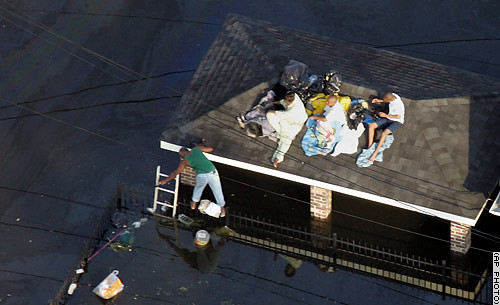
katrina & CL

i was trolling craigslist and, for the first time in a long time, checked out the rants and raves. the topic of choice right now for fucking insane people is hurricane katrina, and - heartbreakingly - the majority of posts involve arguments over comments like, "THERE IS NO KATRINA BUSH IS JUST TRYING TO DIVERT ATTENTION FROM HIS FAILURE IN IRAQ" and "KATRINA = GOD'S PUNISHMENT OF HOMOSEXUALS".

nothing. makes me madder than shit like this. nothing.

i fucking think bush is a narrow-minded idiot, but...honestly, to imagine all those people, husbands, wives, children, businesses, and *hisotry* in louisiana and mississippi, completely devastated, lives lost, families with nothing...and then to turn around and say that it's something the government made up? are you seriously writing that?? how can you assholes SAY something like that, it's so insensitive - even if it's a joke, it's heartless, there is real tragedy happening.

and, bringing back memories of crazy talk back in christmastime when the popular hate theory was that god was punishing the southeast asian nations (oh, and sweden.) for, i dont even know, for whatever, with the tsunami, we have the radical right saying this is a big God is punishing gays/decadence/deviance issue. fuck you. god did this to punish homosexuals? i don't fucking think so, and how dare you. there are people homeless, spouseless, penniless, hungry, scared, and hopeless out there, and you choose to make this a gay thing? FUCK. YOU.

*sigh* my heart goes out to all those in the gulf states. donate where you can, guys.


stop by flickr to see more of hurricane katrina photos.

Friday, August 12, 2005

al qaeda - article

Al-Qaeda Sitcom Filmed Before Live Studio Hostages

AL BHURBAN'Q, AFGHANISTAN — Filming of the second season of al-Qaeda's surprise hit situation comedy Ba'athtime For Abdul will take place before live studio hostages. "We shall not rest until the vassals of the Great Satan know what it is to live, love, and learn as a member of al-Qaeda," said a spokesman for the show, who assured fans that the laugh- and scream-tracks would not be sweetened in post-production. The videotaped statement, like the episodes of the show itself, was delivered to Al-Jazeera's Afghanistan headquarters in a plain box containing the tape and three severed heads of studio hostages.

Monday, June 20, 2005

gay marriage - article

it's too long for me to reprint here, but the ny times magazine has a great article that examines the conservative stance regarding gay marriage. i'm continually fascinated by this political/moral stance - though perhaps 'disgusted with' or 'disillusioned by' are better terms for how i feel about it. the article is excellent. if you end up skimming it, jump to the last 2 paragraphs - a must-read.

Thursday, May 19, 2005

let me walk - article

this is discrimination, pure and simple. honestly, pregnancy is hard enough. being pregnant while being a student - at a roman catholic high school! - i imagine would make it all the worse. but to then not be allowed to receive your diploma with your class? no way! granted, it's probably not as simple as "if you earn it, you should have that right" since i do understand that as a religious school, there are certain moral principles at work that aren't an issue with public schooling. still, if that's the case, why was the father of the child not given the same treatment? you'd think there would be some element of forgiveness on the part of the administration. or understanding at least.

(yes, i was one of the ones who hated the scarlet letter in school...!)

Pregnant student defies graduation ban

MONTGOMERY, Alabama (AP) -- A pregnant student who was banned from graduation at her Roman Catholic high school announced her own name and walked across the stage anyway at the close of the program.

Alysha Cosby's decision prompted cheers and applause Tuesday from many of her fellow seniors at St. Jude Educational Institute.
But her mother and aunt were escorted out of the church by police after Cosby headed back to her seat.

"I can't believe something like this is happening in 2005," said her mother, Sheila Cosby. "My daughter has been through a lot and I am proud of her. She deserved to walk, and she did."

The school's guidance counselor delivered Cosby's degree to her house earlier Tuesday, but she still wanted to participate.

"I worked hard throughout high school and I wanted to walk with my class," she said.
Cosby was told in March that she could no longer attend school because of safety concerns, and her name was not listed in the graduation program.

The father of Cosby's child, also a senior at the school, was allowed to participate in graduation.